
Expanding Opportunity Across Generations: How NAPCA’s SCSEP Supports Seniors and Community Organizations
Communities work best when experience, purpose, and opportunity align. NAPCA’s Senior Community Service Employment Program (SCSEP) does exactly that—creating a bridge between older adults seeking meaningful employment and community organizations that need reliable, skilled support. The two attached flyers outline both sides of this powerful equation: one focused on host agencies, the other on older adults ready to re-enter the workforce. Together, they tell a story of shared benefit, economic dignity, and community strength.
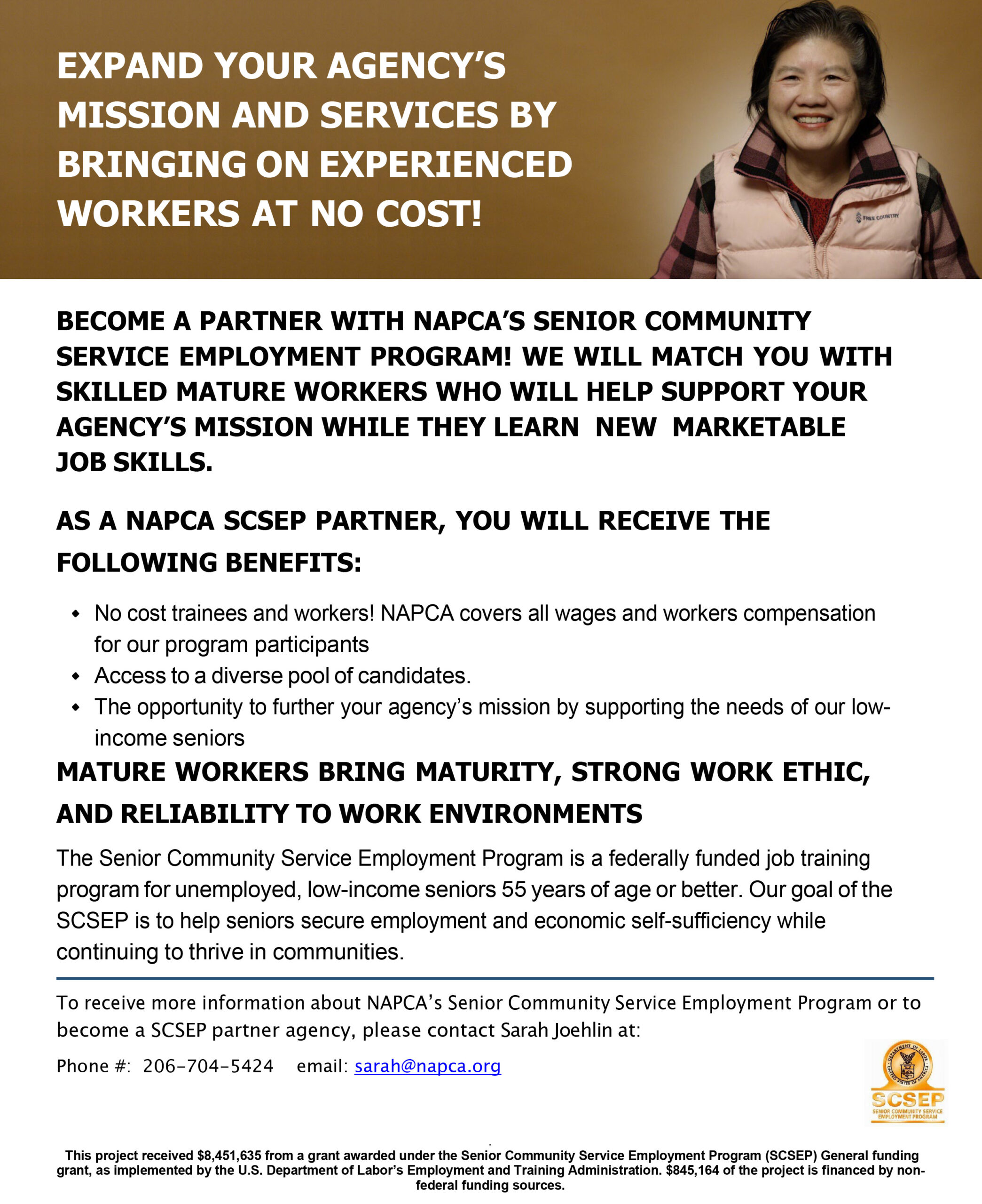
SCSEP is a federally funded workforce development program designed specifically for unemployed, low-income adults age 55 and older. While participants receive paid training and job readiness support, nonprofit and public agencies gain access to experienced workers—at no cost to their organization. It’s not charity, and it’s not a short-term fix. It’s a strategic investment in people and communities.
For Community Organizations: Skilled Support at No Cost
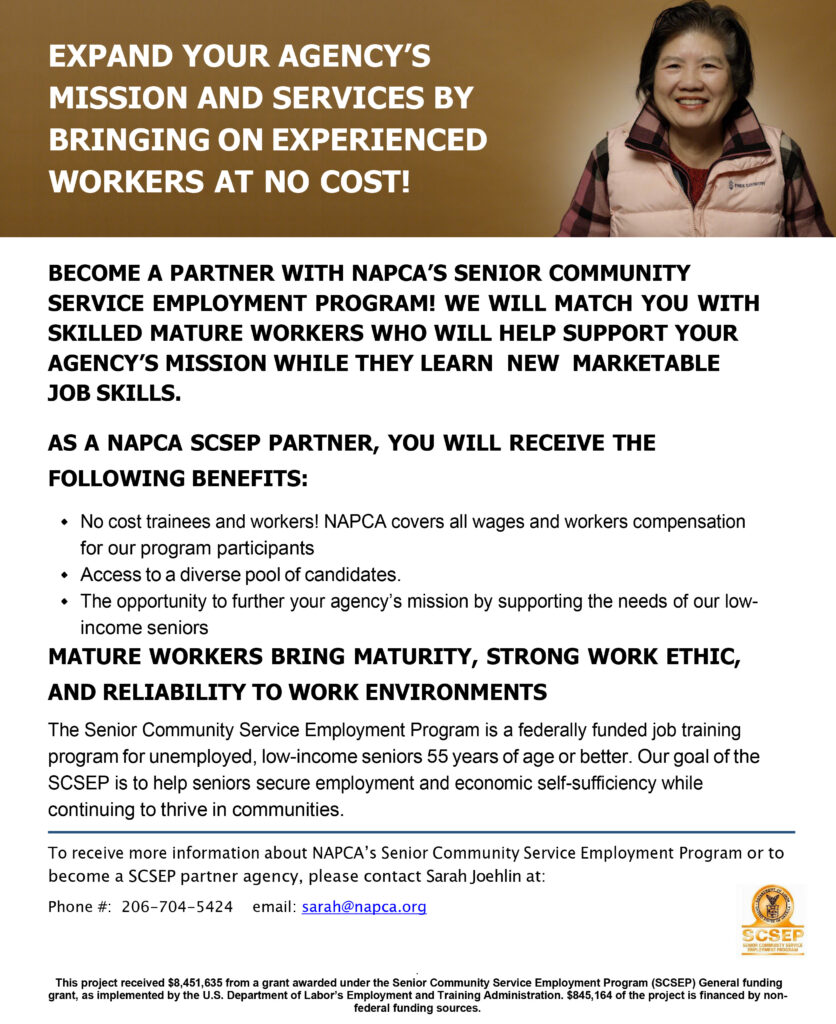
The Host Agency flyer makes the value proposition refreshingly clear. Organizations that partner with NAPCA through SCSEP are matched with mature workers who bring professionalism, reliability, and a strong work ethic to the workplace. Even better, NAPCA covers all participant wages and workers’ compensation, removing a major financial barrier for agencies already stretched thin.
Host agencies also benefit from access to a diverse pool of candidates and the opportunity to directly support low-income seniors in their community. Participants gain hands-on experience and develop marketable job skills, while agencies receive meaningful assistance that helps advance their mission. The attached flyer emphasizes that mature workers don’t just fill roles—they strengthen organizations with institutional knowledge, consistency, and perspective.
For nonprofits, libraries, schools, municipalities, and other public service organizations, SCSEP is a way to expand services without expanding payroll, all while contributing to workforce equity and economic self-sufficiency.
Readers interested in the specifics—program structure, funding, and partner benefits—are encouraged to review the attached Host Agency flyer for a concise overview.
For Older Adults: Paid Training, Support, and a Path Forward
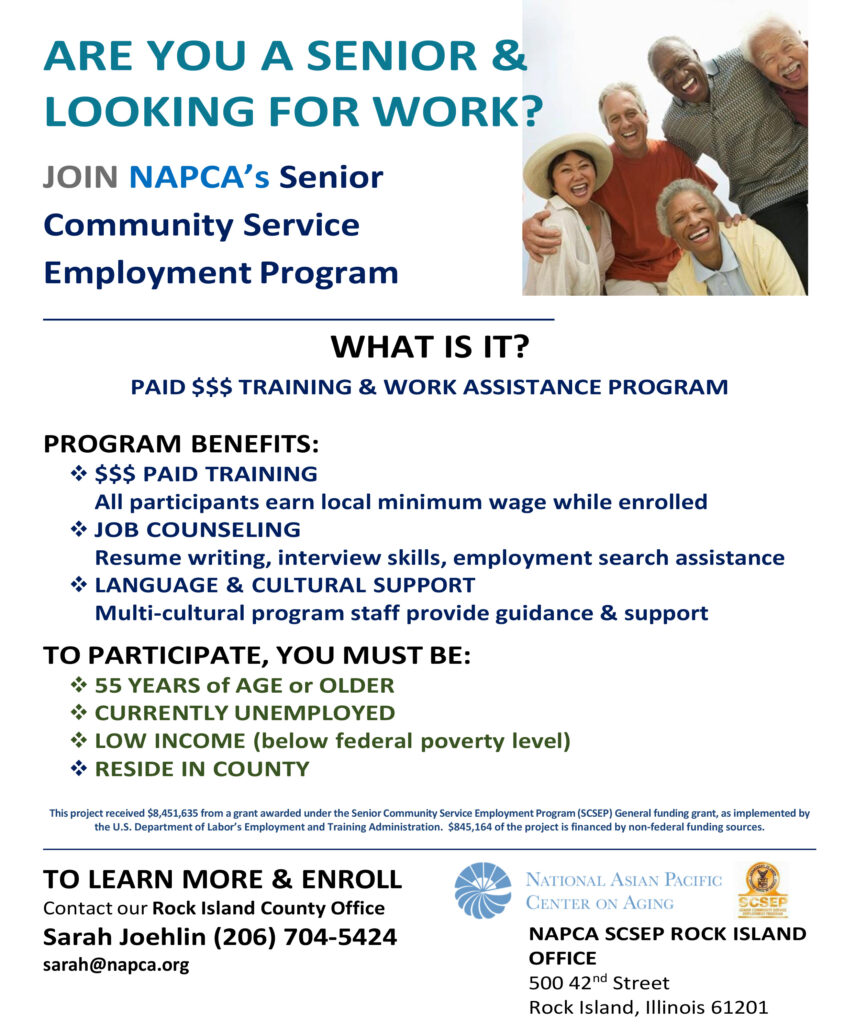
The participant-focused flyer highlights the other half of the equation: older adults who want to work, learn, and stay engaged—but may need support navigating today’s job market. SCSEP offers paid training at local minimum wage, along with job counseling that includes résumé development, interview preparation, and employment search assistance.
Importantly, the program also provides language and cultural support, with multicultural staff who understand that employment barriers are not one-size-fits-all. This makes SCSEP especially valuable for seniors who may be re-entering the workforce after time away, changing careers later in life, or facing linguistic or cultural obstacles.
Eligibility is straightforward and clearly outlined in the attached flyer: participants must be 55 or older, currently unemployed, low income (below the federal poverty level), and residents of the county. The flyer also includes local contact information, reinforcing that this is not a distant or abstract program—it’s available right here in the community.
For older adults, SCSEP isn’t just about earning a paycheck. It’s about confidence, connection, and continued contribution. Work provides structure, social engagement, and a sense of purpose—and SCSEP helps make that possible.
A Program Built on Mutual Benefit
What makes SCSEP stand out is its balance. Older adults gain income, skills, and a pathway to employment. Organizations gain capable, dependable workers who want to contribute. Communities gain stronger services and greater economic inclusion. Everyone moves forward.
The attached documents are worth reviewing closely, whether you’re an employer exploring partnership opportunities or an individual—or family member—seeking employment support. Each flyer speaks directly to its audience, but together they illustrate how SCSEP functions as a community ecosystem rather than a standalone program.
Take the Next Step
If you represent a nonprofit or public agency and are interested in becoming a SCSEP host partner, now is the time to explore how this program can support your mission while strengthening your workforce.
If you are 55 or older and looking for paid training and employment support, SCSEP may be the opportunity you’ve been looking for.
In either case, the next step is simple: reach out to Sarah at NAPCA. She can answer questions, walk you through eligibility or partnership details, and help you get connected to the program that fits your needs.
Review the attached flyers, share them with colleagues or community members, and contact Sarah at NAPCA to start the conversation. Small connections like this are often where lasting community impact begins.
Discover more from The American Job Center - News
Subscribe to get the latest posts sent to your email.